01 /
SERVICE
DOG TRAINING
SERVICE DOG TRAINING IN PAULS VALLEY, OK
Service Dog Training in
Pauls Valley, OK Built
for Real Life
A service dog is not defined by a patch, registration card or the way it looks in public. It is defined by the work it has been individually trained to perform for a person with a disability.
At Buckaroos, our service dog training in Pauls Valley helps dogs and handlers build the skills, communication and reliability needed for that responsibility.
Our four-level training path covers service dog foundations, public access, disability-related task training and advanced working skills. Each level runs for six weeks and combines small classes with individualized guidance.
Not every dog is suited for service work. Before enrollment, we consider the dog’s temperament, health, confidence, behavior around people and animals, and ability to learn the tasks its handler needs.
SERVICE DOG FOUNDATION
PUBLIC ACCESS TRAINING
TASK TRAINING
ADVANCED SERVICE DOG
02 /
Service Dog
Training
Programs
Four Service Dog
Training Classes in
Pauls Valley
Service dog training is a process. A dog may know basic commands and still need considerable preparation before working around public distractions or performing a disability-related task reliably.
Buckaroos offers four service dog classes in Pauls Valley. Each class runs for six weeks and costs $300.
01
Service Dog
Foundations
6-week class – $300
Monday – 9:00 AM to 10:00 AM
Build communication, engagement and the everyday manners needed before more advanced service dog work begins.
02
Public
Access
6-week class – $300
Monday – 11:00 AM to 12:00 PM
Develop calm behavior, handler focus and control around people, dogs and public distractions.
03
Task
Training
6-week class – $300
Monday – 2:00 PM to 3:00 PM
Begin developing specific work or tasks connected to the handler’s disability and everyday needs.
04
Advanced
Service Dog
6-week class – $300
Monday – 4:00 PM to 5:00 PM
Strengthen task reliability, public behavior and teamwork in more demanding situations.
03 /
Service Dog
Foundations
Building the Foundation
for Service Dog Work
A service dog cannot perform consistently if basic communication and everyday manners are still uncertain.
Service Dog Foundations 101 focuses on building the working relationship between the dog and handler. The dog begins learning that paying attention, responding to cues and remaining connected to its handler are part of the job.
Foundation training may include:
- Handler engagement
- Reliable responses to basic cues
- Leash manners
- Settling calmly
- Waiting appropriately
- Working around manageable distractions
- Building confidence
- Improving communication between dog and handler
Puppy Training and Basic Manners are recommended before beginning service dog training. Dogs with a reliable training foundation are better prepared for public access and individualized task work.
Puppy Training
Adult Dog Training
6 weeks – $300
Monday – 9:00 AM to 10:00 AM
04 /
Public Access
Training
Public Access Service
Dog Training in Oklahoma
Public access requires more than basic obedience.
A working dog may encounter shopping carts, food, children, other animals, tight spaces, loud sounds and people attempting to get its attention. The dog must remain under the handler’s control without disrupting the environment.
Public Access helps the dog and handler work together around everyday distractions.
Training may address:
- Calm leash behavior
- Staying focused on the handler
- Ignoring food and environmental distractions
- Settling beside the handler
- Moving through busy or confined spaces
- Remaining neutral around unfamiliar people
- Remaining controlled around other dogs
- Recovering from unexpected sounds or movement
Completing a public access class does not automatically guarantee that a dog is prepared for every public environment. Readiness depends on the dog’s behavior, control, reliability and continued work with its handler.
6 weeks – $300
Monday – 11:00 AM to 12:00 PM
05 /
Disability
Related Tasks
Service Dog
Task Training
A service dog must be individually trained to perform work or tasks that are directly related to its handler’s disability.
Task Training 103 moves beyond general manners and focuses on the specific assistance the handler needs in daily life.
Depending on the handler’s needs and the dog’s ability, service dog tasks may involve:
- Retrieving dropped or needed items
- Alerting the handler to a sound
- Responding to a disability-related event
- Interrupting a specific behavior
- Guiding the handler toward a person or exit
- Creating space around the handler
- Assisting with an established daily routine
These are examples, not a guaranteed list of tasks. The appropriate task must be based on a disability-related need, and the dog must be physically and behaviorally suited to perform it safely.
The handler participates throughout the process because the task must work reliably within the partnership between that person and dog.
6 weeks – $300
Monday – 2:00 PM to 3:00 PM
06 /
Advanced
Service
Dog Training
Building Reliable
Skills for
Real Situations
Learning a task is one step. Performing it reliably when the environment changes is another.
Advanced Service Dog 104 brings together foundation training, public behavior and individualized task work. The dog practices known skills around more challenging distractions while the handler continues developing clear and consistent communication.
Advanced training may focus on:
- Performing known tasks around distractions
- Improving response consistency
- Increasing duration and distance
- Strengthening handler focus
- Moving between different environments
- Recovering calmly from unexpected situations
- Combining public manners with task performance
- Improving teamwork between dog and handler
The goal is not to create a dog that performs only during class. The goal is to build a working partnership that can respond when the handler genuinely needs assistance.
6 weeks – $300
Monday – 4:00 PM to 5:00 PM
07 /
Service Dog
Candidate
Evaluation
Not Every Good
Dog Is the Right
Service Dog
A loving pet can still find service dog work stressful or unsuitable.
Service dogs need the temperament and confidence to work calmly while remaining closely connected to one handler. They must be able to recover from distractions, function around unfamiliar people and dogs, and perform their work without becoming overwhelmed.
Before recommending a service dog training path, Buckaroos considers:
- Temperament
- Physical health
- Confidence and recovery
- Comfort around people
- Comfort around other dogs
- Response to new environments
- Ability to focus on the handler
- Ability to learn the required task
- Existing manners and training foundation
Breed alone does not determine whether a dog is suitable. The individual dog’s health, temperament, behavior and ability matter more.
An honest candidate evaluation protects both the handler and the dog. If the work is not a good fit, forcing the process will not create a dependable service dog.
08 /
Dog and
Handler
Teamwork
The Handler Is Part
of Every Lesson
Service dog training is not something that happens separately from the person who will depend on the dog.
The handler must learn how to give clear cues, reinforce correct behavior, maintain public control and continue practicing outside class. The dog must learn how to recognize and respond to that specific person’s needs.
Before recommending a service dog training path, Buckaroos considers:
- Clear communication
- Consistent cues
- Rewarding correct responses
- Reading the dog’s behavior
- Practicing between classes
- Maintaining public manners
- Protecting the dog’s focus
- Building task reliability
A dependable service dog is part of a dependable team. Both sides of that partnership need training.
09 /
Understanding
Service Dog
Requirements
What Legally Makes
a Dog a Service Dog?
Under the Americans with Disabilities Act, a service dog is individually trained to perform work or tasks for a person with a disability. The work must be directly related to that person’s disability.
Providing comfort through presence alone is not considered a trained service dog task under the ADA.
Federal ADA rules do not require a service dog to carry a special registration, certificate or identification card. A vest does not create service dog status either.
A service dog must remain under its handler’s control in public. A business may ask that a dog be removed if it is out of control and the handler does not regain control, or if the dog is not housebroken.
Training at Buckaroos is intended to develop skills, task reliability and teamwork. Completing a class does not automatically create service dog status or guarantee that a dog is ready for every public environment.
For current federal guidance, visit the ADA Service Animal information page.
10 /
Understanding
the Different
Roles
Service Dogs, Therapy
Dogs and Emotional
Support Animals
01
Service
Dog
A service dog is individually trained to perform disability-related work or tasks for one handler. Qualifying service dogs have public access protections under the ADA.
02
Therapy
Dog
A therapy dog works with its handler to provide comfort and positive interaction to other people in approved settings. Therapy dogs do not have the same public access rights as service dogs.
03
Emotional
Support animals
An emotional support animal provides comfort through companionship. Emotional support alone is not considered trained work or a task under the ADA.
If you are unsure which training path fits your goal, contact Buckaroos before enrolling.
11 /
Local Service
Dog Trainer
Service Dog
Training in Pauls
Valley, Oklahoma
Buckaroos provides structured service dog training in Pauls Valley for handlers from the local area, Garvin County and nearby Oklahoma communities.
Jonathan Cox is a K9 trainer and dog behavior specialist. His service dog classes focus on dogs and handlers learning together through small-group instruction and individualized guidance.
Our Pauls Valley service dog training program provides a clear path from basic foundations to public access, task training and advanced working skills.
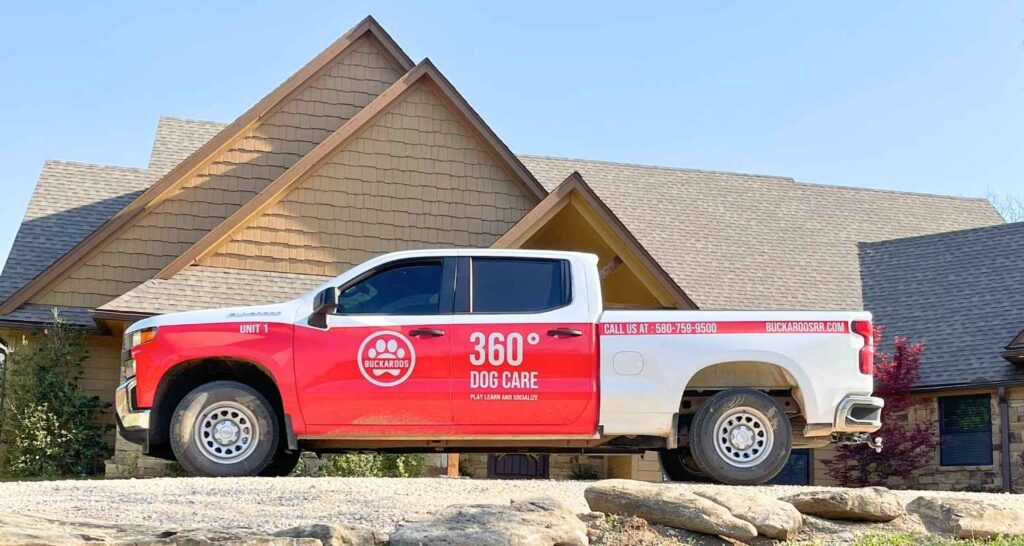
Buckaroos 360 Dog Care
17355 N County Road 3286
Pauls Valley, OK 73075
Call or text: 580-759-9500
PAULS
VALLEY
12 /
Frequently
Asked Questions
Service Dog Training in Pauls Valley FAQ
Do you offer service dog training in Pauls Valley?
Yes. Buckaroos offers service dog training in Pauls Valley, Oklahoma. The four-level program covers foundations, public access, disability-related task training and advanced service dog skills.
How much do service dog training classes cost?
Each service dog class costs $300 and runs for six weeks.
When are service dog classes held?
All four service dog classes are held on Monday:
- Foundations 101 – 9:00 AM to 10:00 AM
- Public Access 102 – 11:00 AM to 12:00 PM
- Task Training 103 – 2:00 PM to 3:00 PM
- Advanced Service Dog 104 – 4:00 PM to 5:00 PM
Can my current dog become a service dog?
Possibly, but not every dog is suited for service work. Temperament, health, confidence, behavior around people and dogs, and the ability to perform the required task must be considered.
Does my dog need previous training?
Puppy Training and Basic Manners are recommended before entering the service dog program. Contact Buckaroos to discuss your dog’s current training and the appropriate starting level.
Are vaccinations required?
Yes. Current vaccination records are required before attending service dog classes at Buckaroos.
What does Task Training 103 cover?
Task Training 103 focuses on developing work or tasks directly related to the handler’s disability. The exact task depends on the handler’s needs and the dog’s physical and behavioral ability.
Does a service dog need certification?
No federal certification or registration is required under the ADA. A service dog must be individually trained to perform disability-related work or tasks and remain under the handler’s control.
Is an emotional support animal a service dog?
No. Emotional support through companionship alone is not considered trained work or a task under the ADA.
Does completing Public Access 102 guarantee public access readiness?
No. Completing the class does not guarantee that a dog is prepared for every public environment. Readiness depends on the dog’s behavior, control, task reliability and continued training with its handler.
Does the handler participate in training?
Yes. Service dog training is built around the dog and handler working as a team. Handler participation and consistent practice between classes are essential.
How long does the complete service dog program take?
Each training level runs for six weeks. The total timeline depends on the dog’s starting level, progress, task requirements and readiness to move forward.
How do I begin service dog training at Buckaroos?
Call or text Buckaroos at 580-759-9500 to discuss your dog, the tasks you need and the appropriate starting level.
13
/
CONTACT
Ready to begin
your service dog
training journey?
Every service dog journey begins with the right candidate, a committed handler and a training plan built around real needs. Contact Buckaroos to schedule an evaluation and find the right place to begin.