01 /
AGGRESSIVE
DOG TRAINING
AGGRESSIVE DOG TRAINING IN PAULS VALLEY, OK
DOG AGGRESSION
TRAINING IN PAULS
VALLEY, OK
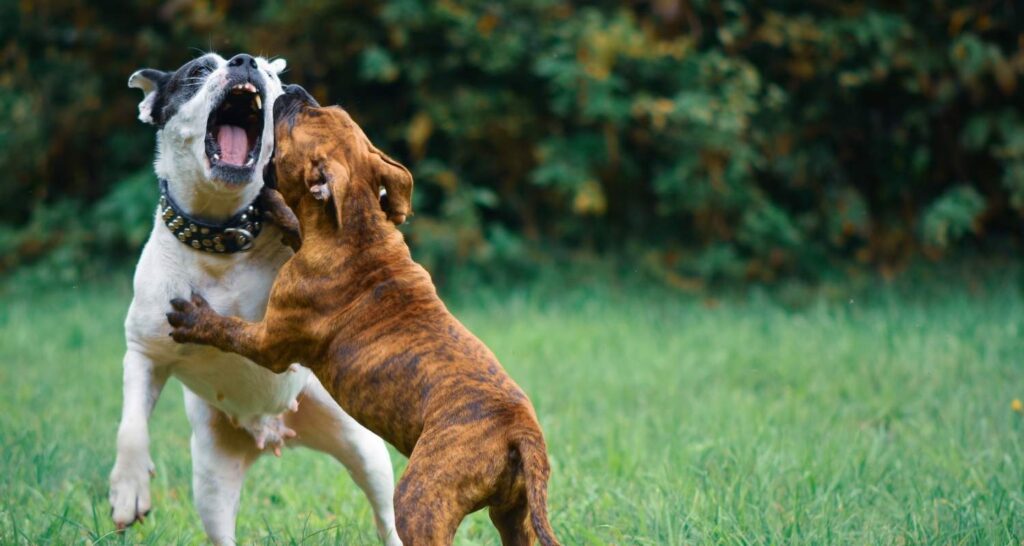
Growling at visitors. Lunging during walks. Guarding food. Snapping when someone gets too close.
These behaviors can change the way an entire household lives. Walks become stressful, visitors need to be managed and owners begin planning every day around avoiding the next incident.
Buckaroos provides private dog aggression training in Pauls Valley, Oklahoma. We help owners understand what is driving the behavior, reduce unnecessary risk and teach their dogs more appropriate ways to respond.
The first step is not punishment. It is an honest evaluation of the dog, the triggers and the situations happening at home.
02
/
PRIVATE
TRAINING
PROGRAM
5 PRIVATE LESSONS - $400
DOG BEHAVIOR &
AGGRESSION SUPPORT
Dog aggression training in Pauls Valley requires more than a general obedience class. This five-lesson private program begins with an evaluation so we can understand your dog’s history, triggers, previous incidents and the situations you are managing at home.
Training Overview:
- Initial behavior evaluation
- Five private training sessions
- Individualized behavior plan
- Management and safety strategies
- Owner coaching
- Progress evaluations
- Scheduled by appointment
- Owner participation required
Behavior and aggression work is handled through private sessions. This gives us more control over the training environment and allows the program to be built around your dog’s history, behavior and home life.
03 /
UNDERSTANDING
THE BEHAVIOR
WHEN YOUR DOG’S
BEHAVIOR STARTS
CONTROLLING YOUR LIFE
Many owners wait because they hope the behavior will settle down on its own. Instead, they slowly begin changing their lives around it.
They stop inviting people over. They cross the street whenever another dog appears. They separate the dog during meals or avoid touching certain toys. Some owners feel embarrassed. Others are genuinely afraid that someone could get hurt.
That is usually the point when professional support becomes necessary.
Aggressive behavior should not be ignored, but it should not be handled through guesswork either. The goal is to understand what causes the reaction, prevent situations from escalating and begin building safer behavior.
A growl, snap or lunge is not random. Something is happening before that reaction. Finding that pattern gives us somewhere useful to begin.
04 /
REACTIVITY VS
AGGRESSION
UNDERSTANDING
THE DIFFERENCE
A dog that barks, pulls or lunges is not automatically aggressive.
Some dogs react because they are afraid. Others become frustrated when a leash prevents them from reaching another dog or person. Excitement, limited social skills and overstimulation can also create intense reactions.
Aggressive behavior may include growling, snapping, attempted biting or biting. However, reactive and aggressive behavior can overlap, and the reason behind a dog’s behavior is not always obvious from the outside.
That is why every dog begins with an evaluation.
We look beyond the visible reaction to understand when it happens, what happens immediately before it and how the people around the dog normally respond.
05 /
COMMON
BEHAVIOR
TRIGGERS
WHAT MAY BE DRIVING
THE BEHAVIOR?
Aggression rarely appears without context. The trigger may be easy to see, or it may take careful observation to identify.
01
FEAR AND
DEFENSIVE
BEHAVIOR
A frightened dog may bark, growl, lunge or snap to make a person or animal move away.
Forcing the dog closer to what it fears can make the response more intense. Training begins by understanding what creates that fear and how much distance the dog needs to remain under control.
02
RESOURCE
GUARDING
Some dogs protect food, toys, resting places or objects they have picked up.
Resource guarding can become dangerous when people repeatedly reach for the item or punish the dog for warning them away. A structured plan helps owners manage these situations while teaching safer responses.
03
LEASH
REACTIVITY
A dog may behave calmly in one environment but bark or lunge when restrained by a leash.
The trigger could be another dog, a stranger, a moving vehicle or something else the dog finds difficult to handle. Leash reactivity needs more than stronger equipment. The dog and owner both need a clearer way to respond.
04
TERRITORIAL
BEHAVIOR
Doorbells, unfamiliar visitors and activity around the home can create intense reactions.
Instead of repeating the same stressful pattern every time someone arrives, owners learn how to manage the environment and give the dog a more appropriate routine.
05
PAIN OR
MEDICAL CHANGES
A sudden change in behavior can sometimes be connected to pain, illness or physical discomfort.
If aggression appeared unexpectedly, arrange a veterinary examination before beginning behavioral training.
06 /
BEHAVIORS
WE EVALUATE
Check if your dog shows these signs
SIGNS THAT IT IS
TIME TO SEEK
PROFESSIONAL
SUPPORT
- Growling or snapping
- Barking or lunging at people
- Reactions toward other dogs
- Resource guarding
- Territorial behavior
- Leash reactivity
- Fear-related behavior
- Sensitivity to handling
- Attempted biting
- A previous bite incident
- Behavior that has become difficult to manage safely
Tell us about every previous incident when requesting the evaluation. Complete information helps us understand the situation and make safer decisions.
The evaluation will determine whether the five-lesson private program is appropriate for your dog.
07 /
THE BUCKAROOS
TRAINING PROCESS
FROM REACTION
TO A CLEARER PLAN
1. We Listen Before We Train
Behavior makes more sense when we understand what happens before, during and after the reaction. Recognizing that pattern helps us build a plan instead of responding differently every time something goes wrong.
2. We Identify the Pattern
Patterns often appear around specific triggers, environments or routines. Identifying them helps us understand what sets the behavior off and where training or management needs to begin.
3. We Create an Individual Plan
There is no universal solution for dog aggression. A fearful dog, a dog guarding food and a dog reacting on a leash may require very different training and management. Your plan is built around the behavior your dog is actually displaying.
4. We Work Through Private Sessions
Private lessons provide a more controlled setting for behavior work. Each session focuses on the skills, management strategies and owner handling needed for your situation.
5. We Help You Continue at Home
Behavior does not change through one lesson alone.
Owners learn how to recognize warning signs, respond more clearly and practice the plan between sessions.
08 /
OUR TRAINING
APPROACH
PUNISHMENT IS NOT THE SOLUTION
BUILDING SAFER
RESPONSES WITHOUT
CREATING MORE FEAR
Punishment may interrupt a reaction in the moment, but it does not automatically change why the dog reacted.
Owners can also review the American Veterinary Society of Animal Behavior’s position on humane dog training.
A dog that is punished for growling may stop giving that warning while still feeling uncomfortable. That can leave the owner with less information, not a safer dog.
- Understanding and managing triggers
- Reinforcing more appropriate responses
- Creating controlled training situations
- Changing negative associations gradually
- Improving communication between dog and owner
- Preventing repeated situations that strengthen the unwanted behavior
09 /
HONEST
EXPECTATIONS
PROGRESS WITHOUT
FALSE PROMISES
Our dog aggression training in Pauls Valley focuses on reducing dangerous reactions, improving communication and giving owners a safer way to manage difficult situations.
Progress depends on the dog, the history of the behavior, the environment and how consistently the training plan is followed at home.
Some dogs make noticeable progress quickly. Others require longer-term management alongside training.
Buckaroos will provide an honest assessment, practical guidance and a plan built around the dog in front of us.
The purpose of the program is to help reduce dangerous reactions, improve communication and give owners a safer way to handle difficult situations.
10
/
LOCAL
BEHAVIOR
SUPPORT
DOG AGGRESSION
TRAINING IN PAULS
VALLEY AND NEARBY
COMMUNITIES
Jonathan Cox is a K9 trainer and dog behavior specialist based at Buckaroos 360 Dog Care in Pauls Valley.
Behavior and aggression sessions are private, scheduled by appointment and available to dog owners in Pauls Valley and surrounding Oklahoma communities.
Buckaroos 360 Dog Care
17355 N County Road 3286
Pauls Valley, OK 73075
Call or text: 580-759-9500
PAULS
VALLEY
11
/
COMMON
QUESTIONS
DOG AGGRESSION TRAINING IN PAULS VALLEY FAQS
DO YOU PROVIDE DOG AGGRESSION TRAINING IN PAULS VALLEY?
Yes. Buckaroos provides private dog aggression training and behavior support in Pauls Valley, Oklahoma. Every dog must complete an evaluation before beginning the program.
HOW MUCH DOES THE AGGRESSION TRAINING PROGRAM COST?
The five-lesson private Behavior & Aggression Support program costs $400. It includes an initial evaluation, individualized plan, management strategies, owner coaching and progress evaluations.
ARE THE SESSIONS PRIVATE?
Yes. Behavior and aggression sessions are private and scheduled by appointment. This service is not offered as a group class.
WHY IS AN EVALUATION REQUIRED?
An evaluation helps us understand your dog’s behavior, history, triggers and previous incidents. It also helps determine whether this program is appropriate for your dog.
CAN BUCKAROOS WORK WITH A DOG THAT HAS BITTEN SOMEONE?
A dog with a bite history must be evaluated before training begins. Tell Buckaroos about every previous bite, attempted bite or aggression incident when requesting the evaluation.
WHAT IS THE DIFFERENCE BETWEEN REACTIVITY AND AGGRESSION?
Reactivity is an intense response that may come from fear, frustration, excitement or overstimulation. Aggressive behavior may include growling, snapping, attempted biting or biting. Because the two can overlap, an evaluation is important.
CAN AGGRESSIVE BEHAVIOR BE PERMANENTLY CURED?
No responsible trainer can guarantee that aggression will disappear permanently. Training can help reduce reactions, build safer responses and give owners better ways to manage difficult situations.
WILL I NEED TO PARTICIPATE IN THE LESSONS?
Yes. Owner participation is required. You will learn how to recognize warning signs, manage triggers and continue the training plan at home.
SHOULD I PUNISH MY DOG FOR GROWLING?
Do not punish a growl without understanding what caused it. Growling is a warning that the dog is uncomfortable. Punishment may remove the warning without resolving the underlying problem.
WHAT SHOULD I DO IF MY DOG SUDDENLY BECOMES AGGRESSIVE?
Schedule a veterinary examination first. Sudden behavioral changes can sometimes be connected to pain, illness or another medical problem.
HOW LONG DOES THE PROGRAM TAKE?
The program includes five private lessons scheduled by appointment. The overall timeline depends on appointment availability and the training plan developed for your dog.
HOW DO I GET STARTED?
Call or text Buckaroos 360 Dog Care at 580-759-9500 to request the required evaluation.
12
/
CONTACT
You do not have
to handle
serious behavior
problems alone
Growling, snapping, biting, fear and reactivity should not be ignored or guessed at. Contact Buckaroos to schedule an evaluation and take the first step toward a safer, more manageable plan for you and your dog.